


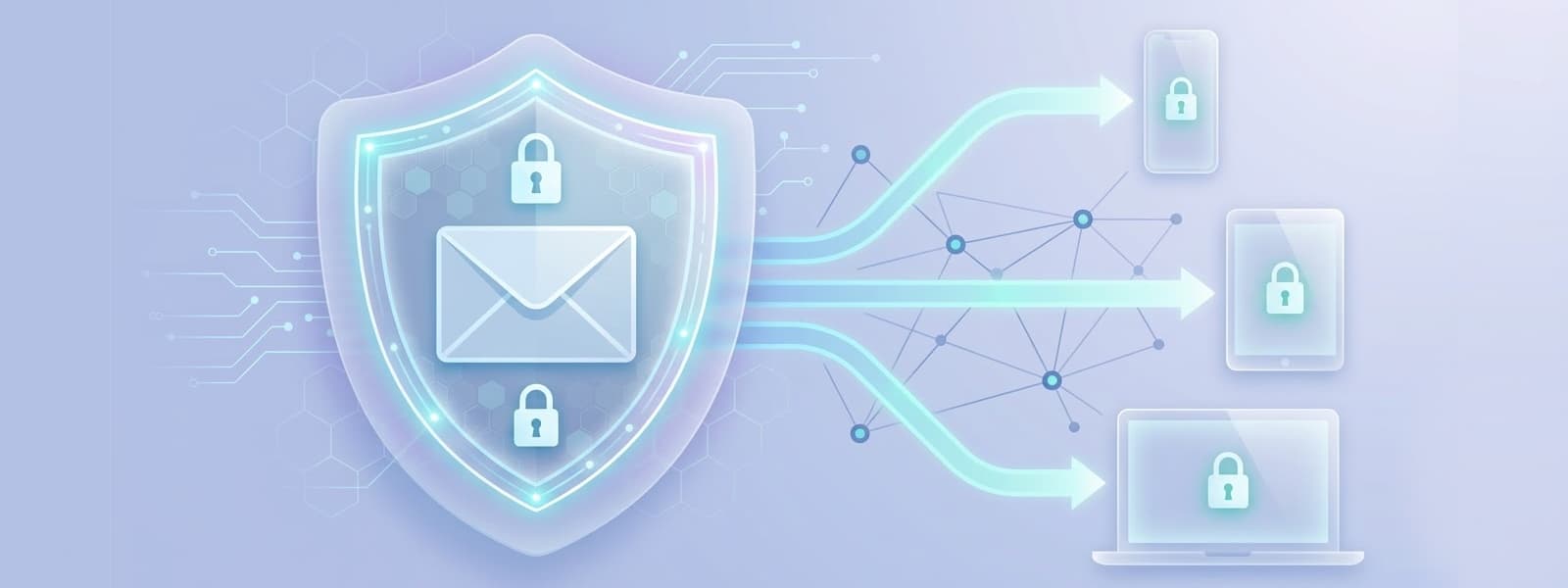
Your Email Address Is the Key to Your Digital Life
Think about everything your email address unlocks: your bank account, your social media profiles, your shopping history, your subscriptions, your medical records, your work communications. Every account you've ever created online is tethered to an email address. Which means whoever has your email address has a skeleton key to your digital identity.
Most people treat their email address like a phone number — something they hand out freely and expect others to handle responsibly. But the modern email ecosystem doesn't work that way. Your address is a commodity, and there are multiple active mechanisms working right now to collect, track, and monetise it without your meaningful knowledge or consent.
Understanding those mechanisms is the first step to stopping them.
4 Ways Your Email Privacy Is Being Violated Right Now
Tracking Pixels
A tracking pixel is a 1x1 invisible image embedded in an email. When you open the email, your client loads the image from a remote server — and in doing so, sends the sender your IP address, device type, email client, operating system, and exact timestamp of the open.
The sender now knows you opened the email, when you opened it, where you were, and what device you used. This data is used to optimise future campaigns, score your "engagement", and in some cases, shared with advertising networks.
What to do: Disable automatic image loading in your email client, or simply don't open emails from senders you don't trust.
Data Broker Resale
When you sign up for a newsletter, enter a competition, or create an account on a retail website, many of those platforms sell or share your email address with "marketing partners" — which is legal language for data brokers. Those brokers compile profiles combining your email, name, location, purchase history, and browsing behaviour, then sell access to that profile to advertisers.
This is standard commercial practice, not a shady edge case. Major household-name retailers do it. Publishers do it. The language in their privacy policies — "sharing with affiliated companies" — is the legal mechanism.
List Cross-Referencing
Multiple services you use can share your email address and cross-reference it to build a unified profile of your behaviour across platforms. If you bought something from Store A and browsed Store B, and both companies share data with the same broker, that broker now knows about both events — connected to your email address.
Breach Exposure and Resale
When a company suffers a data breach, your email address is typically part of what's leaked. That address then circulates on dark web forums, gets compiled into spam lists, and is used for targeted phishing — often for years after the original breach.
6 Proven Ways to Protect Your Email Privacy
Use a disposable email for any signup that doesn't require permanent access. This is the single most effective intervention available. A 10-minute inbox for quick verifications, a 3-day inbox for trials and services that send follow-up emails — neither address can be tracked, leaked, or sold, because neither exists long enough to be in a database.
Disable automatic image loading in your email client. This blocks tracking pixels entirely. Gmail, Outlook, and Apple Mail all have this setting. You'll see broken image icons in some emails, but you'll also stop broadcasting your location and behaviour to every marketing platform with your contact details.
Audit your subscriptions every quarter. Most people are subscribed to far more marketing lists than they realise. A quarterly unsubscribe pass — using a tool like Unroll.me or your email client's bulk unsubscribe feature — removes you from lists before your address can accumulate more value.
Use email aliases for services you trust but want to isolate. Apple's Hide My Email, SimpleLogin, and AnonAddy all let you create unique aliases per service. If one gets breached or sold, you can kill just that alias without affecting anything else.
Read privacy policies for the data sharing section specifically. You don't need to read the whole thing. Search for "share", "partners", "affiliates", and "third parties". What you find will tell you exactly what's going to happen to your address.
Enable two-factor authentication on your primary email account. This doesn't prevent your address from being shared — but it prevents someone who obtained your address from using it to access your account through a phishing attempt or credential stuffing.
Choose the Right Temp Mail for Your Situation
The most practical privacy tool available right now is a disposable inbox. Choosing the right duration matters.
10-Minute Temp Mail — Self-destructs in exactly 10 minutes, but you can extend it as many times as needed with one click. Perfect for getting past an email verification gate quickly and then disappearing completely. No data persists after expiry. Use this for: one-time download gates, quick trial signups, verification codes.
3-Day Temp Mail — Stays live for several days. Long enough for software trials, multi-session app testing, QA cycles, or any signup where you expect to receive follow-up emails. Everything is permanently deleted when the address expires. Use this for: SaaS trials, services with delayed onboarding emails, developer testing workflows.
7 Steps to Better Email Privacy — Starting Today
- Create a secondary email address for low-priority signups — separate from your primary personal and work addresses.
- Use a 10-minute temp mail for anything you'll use once — download gates, giveaways, one-time access.
- Use a 3-day temp mail for trials — evaluate products properly without entering their CRM.
- Disable auto image-loading in your email client settings right now.
- Unsubscribe from everything you don't actively read — this week, not someday.
- Check HaveIBeenPwned.com to see which breaches have already included your address.
- Review the privacy policy of any new service before giving them your real address.
Keep Reading
- How Temporary Email Protects Your Privacy Online
- What Is Disposable Email? The Complete Guide
- How to Avoid Spam: 7 Proven Strategies
- How Anonymous Email Protects You From Phishing
Your free disposable email is ready right now — the fastest way to stop handing your real address to services that don't deserve it.
Your temp mail is ready right now
No signup, no password. A disposable inbox waiting the moment you open the page.
Get My Free Temp Mail →